
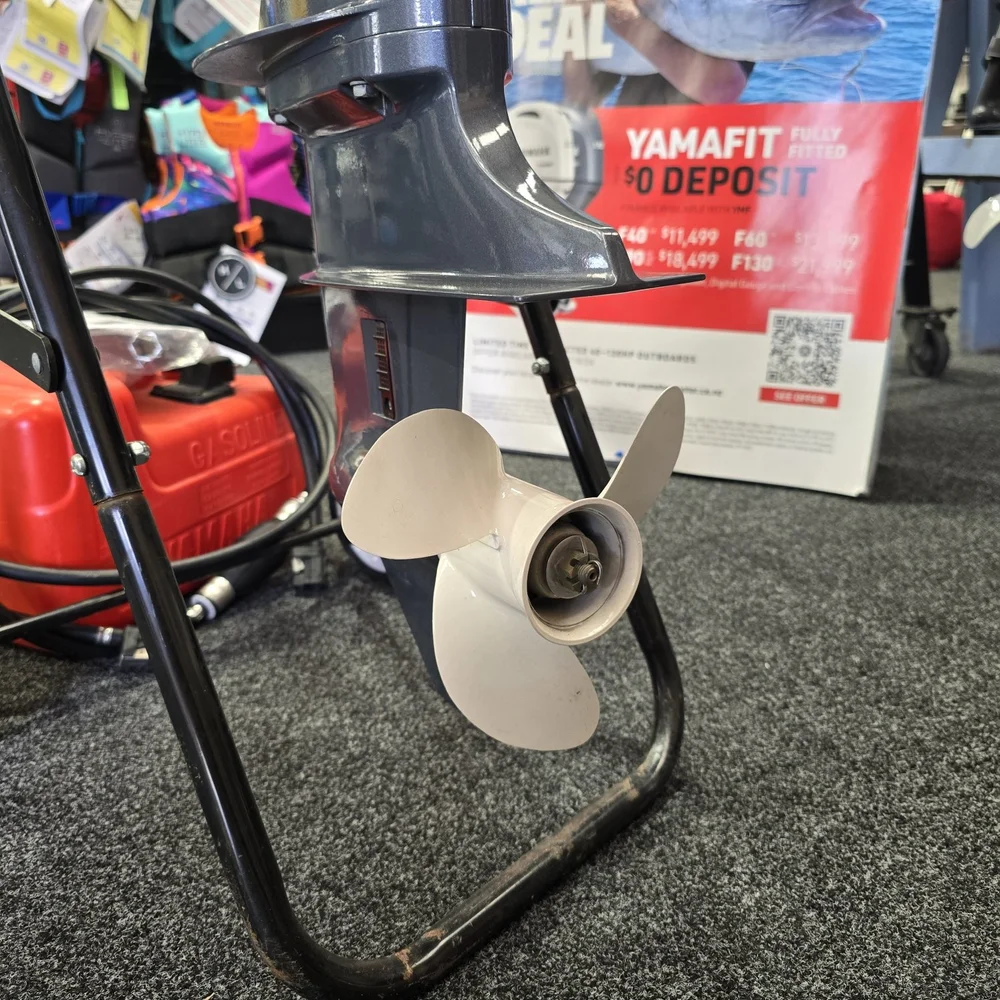
Yamaha 9.9 HP Outboard Motor- A Comprehensive Guide to Dependability and Performance
Everything You Need to Know About the Yamaha 9.9 hp outboard motor in One Comprehensive Guide
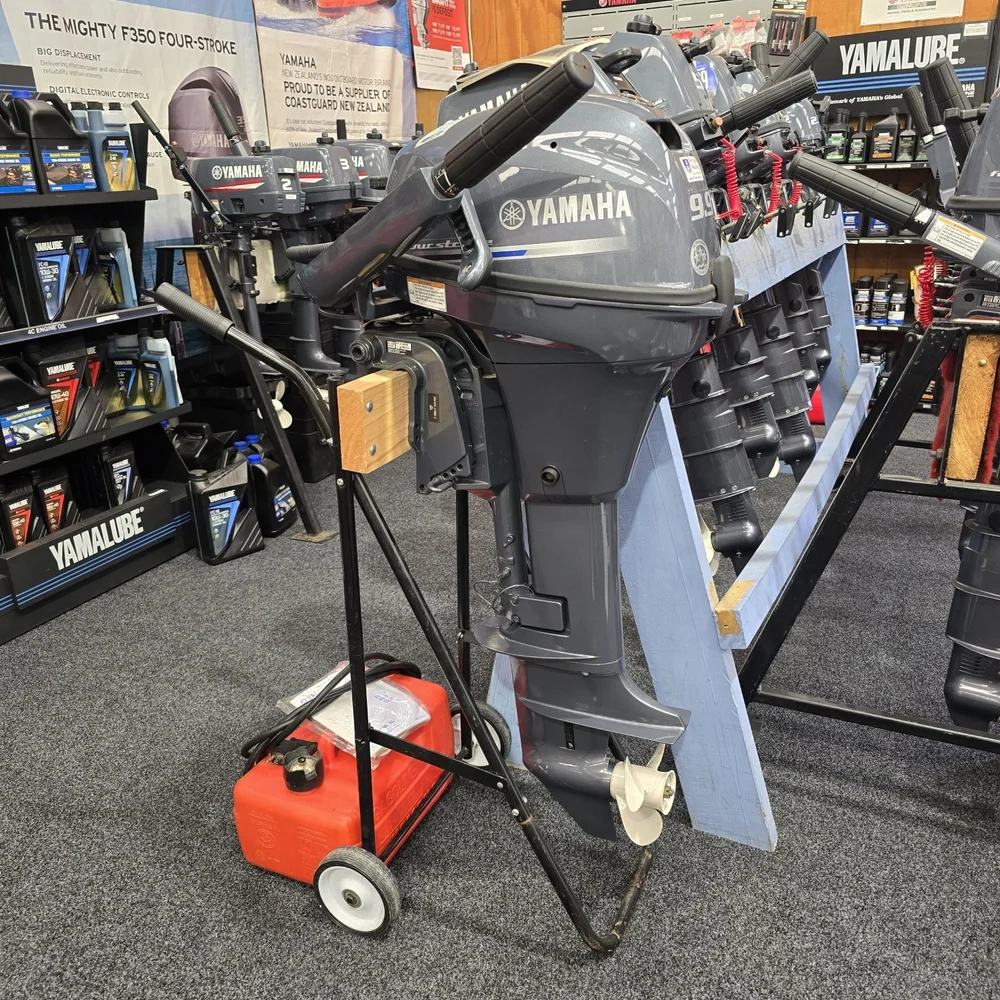
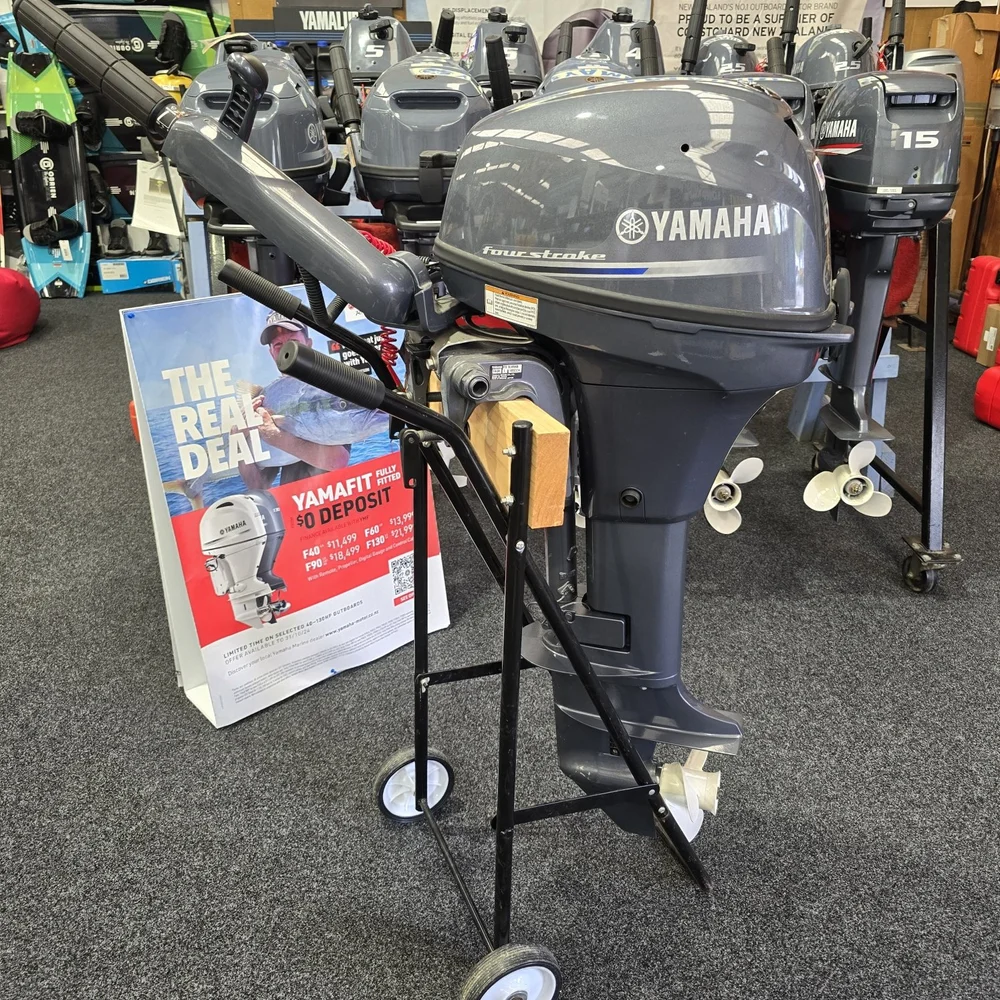
Whether you’re outfitting a small boat, dinghy, inflatable or searching for a reliable kicker to your main engine, the Yamaha 9.9 HP outboard motor offers a solid blend of power, portability, and performance. We’ll go over its features, specifications, suitability, comparisons, real-world performance, maintenance advice, and more in this comprehensive guide. It’s time to get started because the term “Yamaha 9.9 HP outboard motor” keeps coming up.
What Makes the Yamaha 9.9 HP Outboard Motor the Best Option?
There are several strong reasons why the Yamaha 9.9 HP outboard motor is unique in its class:
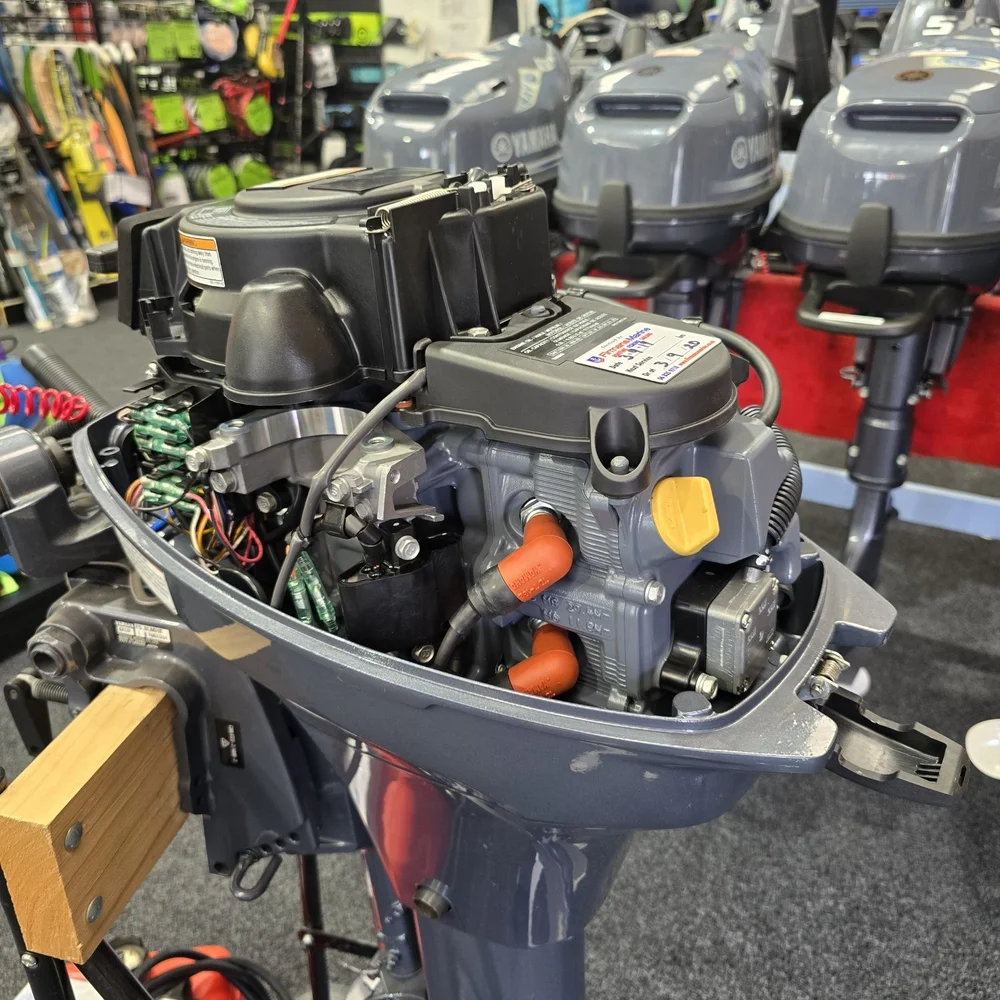
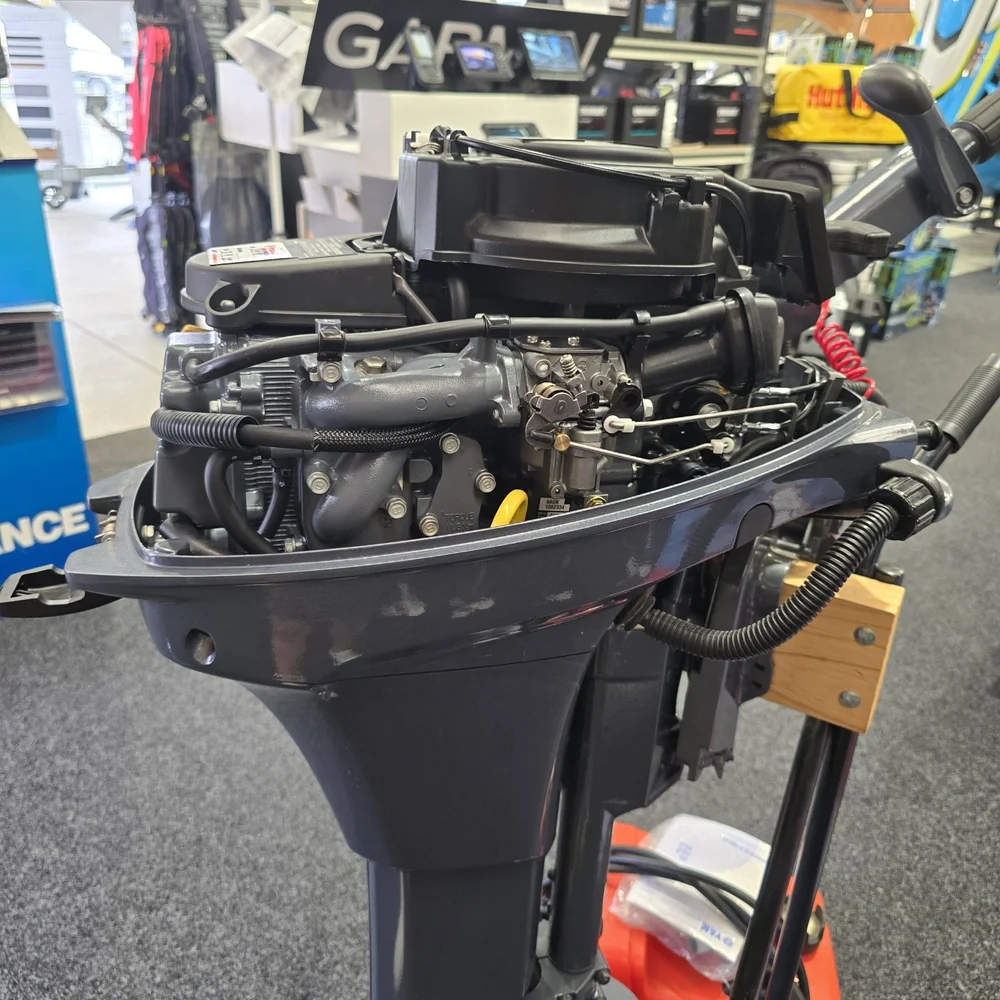
. In several variants, it has a 212 cc twin-cylinder, SOHC four-stroke powerhead.
. For instance, one evaluation found that the F9.9FS variation weighs about 39.9 kg (short shaft) and produces about 9.8 horsepower at about 5500 rpm.
. Yamaha’s F9.9 and T9.9 models are some of the lightest four-stroke 9.9 horsepower outboards available, emphasizing portability and ease of storage.
. The attractiveness is increased by the brand’s service network, parts availability, resale value, and reputation for dependability.
. Yamaha did a fantastic job. Having a Yamaha will yield a high resale value.
In summary, the Yamaha 9.9 HP outboard motor is a strong option if you’re searching for a dependable, effective, four-stroke motor with a solid reputation.
| Spec | Details |
|---|---|
| Displacement | 212 cc (two-cylinder SOHC) |
| Bore × Stroke | 56 × 43 mm |
| Rated HP | 9.9 hp (or about 9.8 hp in certain tests) |
| Recommended WOT (wide open throttle) range | 5,000–6,000 rpm |
| Weight (short shaft) | ~39 kg (about 86 lbs) for one version |
| Shaft lengths available | Multiple, including 15″ (short), 20″ (long) etc. |
| High-Thrust version available | T9.9 model with higher gear ratio and dual thrust prop option. (Yamaha Motor Corporation) |
When comparing with different motors or determining compatibility and installation, these figures provide you with a clear basis.
Features and Advantages
Let’s examine the features that make the Yamaha 9.9 HP outboard motor desirable.
Compact size and portability
In their range of portable outboards, Yamaha highlights that the 9.9 HP model has “lightweight, efficient power that’s easy to stow.”
This indicates that the Yamaha 9.9 HP outboard motor checks the portability box for small boats, dinghies, or dual-engine setups when weight is an issue.
Smooth and silent four-stroke operation
The switch from two-stroke to four-stroke small-outboards results in improved emissions, reduced smoke and odor, and quieter operation. A Yamaha 9.9 HP outboard motor test study revealed:
It didn’t emit any oil smoke and started easily, hot or cold. The Yamaha was incredibly responsive and silent.
Because of this, it is more comfortable for long trips or leisure use.
High-thrust variant for more demanding or heavy loads
Additionally, Yamaha provides a “High Thrust” version of the 9.9 HP outboard motor (such as the T9.9) for bigger craft, yachts, and pontoons:
“The High Thrust 9.9 is made for heavy boats that need more thrust and is compatible with mechanical controls.”
Therefore, this variant gives you the versatility you need if your boat is heavier or you require more torque at low speeds.
Good resale and service support
The following was the conclusion drawn from the Yamaha 9.9 HP outboard motor review:
“It will fetch a good resale price because it is a Yamaha that is permanently bolted on.”
tradeaboat.com.au
This implies that you’re investing in a brand ecosystem rather than just engine specifications.
Ideal for a variety of small-boat uses
According to a frequently cited article about 9.9 HP outboard motors:
Even a 9.9-horsepower engine can propel a RIB at nearly 20 knots, making it a suitable match for larger rigid inflatable dinghies.
Realistic Sailor
Thus, the Yamaha 9.9 HP outboard engine strikes a balance between avoiding bulk or excessive cost and having enough power for a variety of small-boat applications.
Applications: The Best Uses for the Yamaha 9.9 HP Outboard Motor
Matching the motor to your hull, load, environment, and use-case is essential when choosing an outboard motor. In the following situations, the Yamaha 9.9 HP outboard motor performs exceptionally well:
When you require a dependable push without an excessive engine weight, small to medium inflatables and dinghies are lightweight vessels.
Tenders for larger boats: The Yamaha 9.9 HP outboard motor is commonly employed as a secondary or kicker engine due to its mobility.
Flats and shallow water fishing: Its four-stroke efficiency and reduced weight make it ideal for quiet approach and shallow drafts.
For larger boats (particularly the High Thrust model), backup/kicker is used when full main-engine consumption is not desired.
mariners on a tight budget who desire four-stroke performance and brand dependability without going beyond 15 horsepower.
The Yamaha 9.9 HP outboard motor, however, might not be as powerful as more powerful models if your boat is huge, highly loaded, or you anticipate flying with several passengers at fast speeds. Despite 9.9’s versatility, one guide observes:
“It depends on your boat size and what you’re looking for.”
Thus, the motor should always be matched to the ship and load.
Performance & Real-World Usage
In real life, what can you anticipate from the Yamaha 9.9 HP outboard motor? Let’s examine some important factors and user testing.
Speed, acceleration, and load management
The Yamaha 9.9 HP outboard motor performed better than its competitor under specific circumstances in a comparison assessment of small outboard motors:
“In Sarasota Bay tests, the Yamaha 9.9 performed better than the Suzuki.”
An additional, more thorough analysis of the F9.9FS model reveals:
There’s no escaping these little twin-cylinder four-strokes for longer runs. “On the water … started easily hot or cold … ticked over quietly and smoothly … The Yamaha was so quiet and responsive in its upper rpm range.”
An example from the same review: a 3.6-meter boat with a load of about 300 kg was moving at about 12.8 knots at 4500 rpm; WOT was about 19.5 knots.
That gives you an idea of what to anticipate; your hull, prop, load, and conditions will all be different, of course.
Fuel efficiency and operating expenses
Compared to conventional two-stroke engines, the Yamaha 9.9 HP outboard motor’s four-stroke design allows for quieter running, reduced fuel consumption, and longer between-major-service intervals. One report recommended oil changes every 50 hours or six months for intensive use.
Additionally, another 9.9 HP motor resource mentions:
“Considering its weight and cost in comparison to other more powerful models, the compact 9.9 HP outboard motor is also well-liked.”
Therefore, it remains strong in terms of operating cost efficiency.
Maintenance and durability
Using information from the review and the Yamaha owners manual:
The Yamaha 9.9 HP outboard motor’s manual promotes regular maintenance and usage of original parts.
Despite being heavier than its two-stroke competitors, the F9.9FS was reviewed for its outstanding build quality and the value added by Yamaha’s servicing network.
As one forum participant pointed out:
“Yamaha outboards are great but there is greater fluctuation between their 9.9hp – 20hp motors and they weigh more.”
This serves as a reminder that even with outstanding build quality, weight and craft match are still important considerations.
Selecting the Proper Yamaha 9.9 HP Outboard Motor Variant
There are a few important options and variations to take into account when purchasing a Yamaha 9.9 HP outboard motor:
High vs. Standard Thrust
conventional 9.9 HP: Excellent for leisure use, light to moderate loads, and conventional hulls.
High Thrust (HT) 9.9 HP: Ideal for larger vessels, pontoons, or sailboat tenders, this engine offers a higher gear ratio, dual thrust prop choices, and improved low-speed torque.
Length of Shaft
Select the shaft length (15, 20, 25, etc.) according to the design of your boat and the height of your transom. For instance, the 2022 T9.9 HT model’s long-shaft version is designed for 20 and 25 shafts and weighs about 102 pounds.
Controls and Start Configurations
Remote helm control versus tiller handle. Mechanical controls and tiller handles are supported by the Yamaha range.
Market and model-specific differences may exist between manual and electric/electric-remote start options.
According to Yamaha’s portable line, some models may have different cowl style (such as pearlescent white for mobility).
Gear Ratio and Propeller Selection
Selecting the appropriate prop (pitch, diameter) and gear ratio is crucial, particularly for heavier craft or High Thrust variants. Yamaha’s high-thrust versions come with prop selector tools.
Budget and Resale Factors
Even while a Yamaha 9.9 HP outboard motor costs more than other low-cost two-stroke competitors, the long-term benefits (reliability, fuel savings, and resale value) frequently surpass the original investment. According to one article, depending on the specifications, typical 9.9 HP outboards retail for $2000 to $3000+.
Tips for Installation and Setup
To maximize the performance of your Yamaha 9.9 HP outboard engine, follow these best practices:
Match the motor to your hull and load: A 9.9 might not be able to handle a large or highly laden boat; you may need to think about getting a larger horsepower.
Choose the right shaft length to maximize performance and prevent venting. Make sure the transom depth and prop clearance are correct.
Make the right propeller choice by using Yamaha’s prop-selector tool (particularly for HT models) and taking your boat’s weight and speed objectives into account when choosing a propeller.
Yamaha Motor Company
The anti-ventilation plate should be set close to keel height, and the boat should be trimmed to ride level in the air. Outboard general guidance is applicable.
Break-in and first service: Pay close attention to the instructions; early hours call for more careful observation of the oil, belts (for certain models), etc. For example, one review recommended checking the camshaft drive belt yearly on the F9.9FS.
Fuel and oil: Use high-quality fuel and the specified oil (such as Yamalube 4M for ambient to 35 °C). One review cautioned against using E10 fuel of inferior quality.
Winterization/off-season care: Although four-stroke models are more durable, handle them the same way you would any marine outboard: cover the fuel and ignition systems, store dry, and flush the fresh water if the boat is in salt.
Checklist for Maintenance to Maintain the Smooth Operation of Your Yamaha 9.9 HP Outboard Motor
Your Yamaha 9.9 HP outboard engine will last longer and perform at its best with regular maintenance. Make use of this checklist:
.Depending on usage, check and replace engine oil every 50–100 hours or 6–12 months. One review suggested 50 hours or 6 months for heavy trolling.
.Examine the lower unit and propeller for damage, make any necessary repairs, and get rid of any weeds or rope.
.Examine the anodes, water pump impeller, and gearcase grease (particularly in saltwater).
.To guarantee proper fuel flow, inspect the primer bulb, filter, venting, and fuel lines.
.For smooth operation, check and modify the shift/throttle linkage, particularly on tiller models.
.If necessary, winterize by flushing the cooling system, stabilizing the fuel and fog motors, and storing in a dry location.
.Frequent maintenance by an authorized Yamaha dealer maintains the warranty’s validity and raises the item’s resale value.
The Yamaha 9.9 HP Outboard Motor’s Benefits and Drawbacks
Advantages
outstanding reputation for dependability and brand loyalty.
Four-stroke operation that is quiet and smooth.
Sufficiently portable for kickers, inflatables, and small boats.
For heavier ships, the High Thrust variant provides flexibility.
Good parts availability and resale value.
Cons
According to one evaluation, the weight is higher than that of certain ultra-light two-stroke 9.9 alternatives.
Realistic Sailor
It might be underpowered if you push it above the hull/load restrictions (large boat + plenty of passengers, for example).
Long-term benefits require maintenance; initial cost is more than those of cheap two-stroke units.
Depending on the area, purchasing an older model might not provide you with the newest features or fuel management.
Yamaha 9.9 HP Outboard Motor Comparison with Other Options
To show you how the Yamaha compares, let’s look at its peers.
Suzuki versus Tohatsu and Yamaha
One forum provided a summary:
“Yamaha outboards are fantastic, but their 9.9- to 20-hp motors fluctuate more and they weigh more.”
Reddit
In the review of “9.9 Outboards Face Off” by Practical Sailor:
“In tests, the Yamaha 9.9 performed better than the Suzuki … weight is still a problem for all 9.9 four-strokes.”
Therefore, weight in comparison to some competitors is a trade-off even though Yamaha performs and is reliable on par with its competitors.
Electric vs. Yamaha: 9.9 HP Equivalent
Current 9.9 HP outboard guidelines mention the emergence of electric alternatives:
A 9.9 HP electric outboard motor is quiet, almost silent, and requires less maintenance.”
ePropulsion
If electric propulsion and zero emissions are your top priorities, you might want to look at other brands of 9.9 HP electric systems. However, for conventional four-stroke gasoline power with legacy compatibility, the Yamaha 9.9 HP outboard motor is still a good option.
Checklist for Purchasing a Yamaha 9.9 HP Outboard Motor
Be important to check these boxes before purchasing a Yamaha 9.9 HP outboard motor:
.Can a 9.9 HP engine handle the weight, size, and anticipated load of your boat’s hull?
.Have you selected the appropriate shaft length for your clearance and transom requirements?
.Do you require normal version or High Thrust version (for higher load or low-speed torque)?
.Does your boat setup suit the type of control you have (remote helm vs. tiller)?
.Have you inquired about local dealer assistance, warranty, and part availability?
.Are you ready for routine upkeep (prop, lower unit, oil)?
.Have you looked at the resale value and considered upgrading later?
.The aforementioned maintenance checklist is still applicable if you’re purchasing secondhand; verify the engine’s hours, running condition, and service documents.
Frequently Asked Questions Regarding the Yamaha 9.9 HP Outboard Motor
To help you make a more informed choice, here are answers to often asked questions.
Q1: How quickly can my boat go with the Yamaha 9.9 HP outboard motor?
A boat’s size, weight, hull type, propeller, cargo, and water conditions all have a significant impact. On a 3.6-meter boat carrying a 300-kilogram load, the Yamaha 9.9 HP outboard motor (F9.9FS) demonstrated ~12.8 knots at 4500 rpm and ~19.5 knots at WOT.
It’s quite capable for tiny inflatables, but expect more modest performance and a lower top speed for larger craft.
Q2: Does an outboard with 9.9 HP have enough power?
A lot of tiny boats, tenders, inflatables, and kickers, yes. However, you might be overtaxing the Yamaha 9.9 HP outboard engine (or any 9.9 HP model) if your craft is big, heavily loaded, needs to take off fast, or has a lot of passengers. According to one guide:
“It depends on your boat’s size.”
Q3: What is the weight of the 9.9 HP Yamaha outboard motor?
A review states that some short-shaft variants (like the F9.9FS) weigh roughly ~39 kg (86 lbs).
The weight of high-thrust and long shaft types may be higher (e.g., one listing showed ~106 lbs).
Collinsmarine.com
Q4: How do standard and high-thrust versions differ from one another?
A: Designed for bigger loads, sailboat tenders, pontoons, or rougher water, the Yamaha 9.9 HP outboard motor’s High Thrust (HT) variant (T9.9) has a higher gear ratio and frequently a dual-thrust propeller option.
Q5: Is fuel injection used in the Yamaha 9.9 HP outboard motor?
A lot of the older models have carburetors. The F9.9FS, for instance, has a carb engine head.
Because some markets may offer fuel injection, always make sure to verify the exact model year and location.
Q6: What maintenance information should I be aware of?
A: Prop inspection, lower unit servicing, fuel system check, proper fuel grade, routine oil changes, and winterization if necessary. One review for the Yamaha 9.9 HP outboard motor recommended oil changes every 50 hours or 6 months for intensive use.
tradeaboat.com.au
Q7: Where can I locate the owner’s manual and more thorough specs?
A: Complete specifications are available in Yamaha’s official literature; go to the owner’s manual PDF for the F9.9/T9.9 models.
In conclusion
For boaters looking for a modest, dependable, and efficient four-stroke engine for small to medium craft, tenders, inflatables, or backup/kicker engines, the Yamaha 9.9 HP outboard motor is an exceptional option. With its 212 cc twin-cylinder SOHC design, sturdy construction, and Yamaha’s extensive service network, this motor offers both performance and peace of mind.
You can enjoy many hours of dependable, smooth propulsion if you match it properly to your boat (hull size, weight, shaft length, and control type) and adhere to good installation and maintenance procedures.
However, if your craft requires heavy cargo, rapid speed, or ultra-lightweight portability, be sure to assess whether the Yamaha 9.9 HP outboard motor will satisfy your needs or if upgrading to a greater horsepower engine makes sense.


Leave a Reply